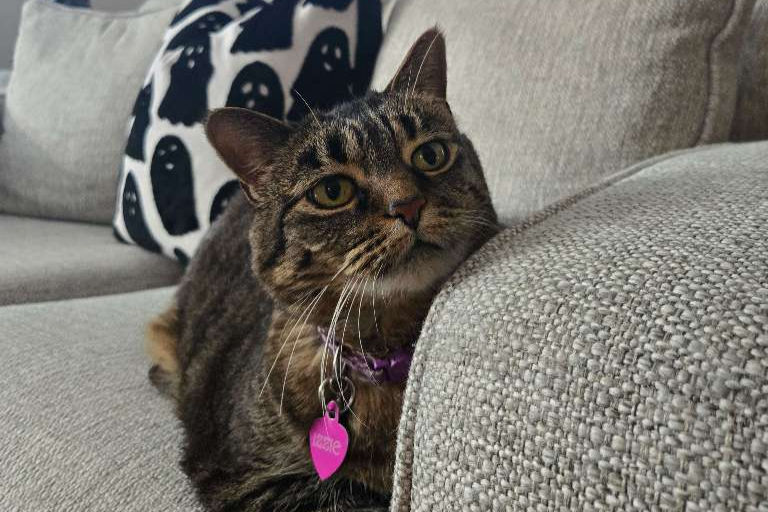
What If My Cat Hides the Whole Time?

If your cat hides during visits, that's completely normal. Many cats need time to adjust to a new person in their home. A professional cat sitter can still provide food, water, litter box maintenance, wellness monitoring, and updates, even if your cat chooses not to interact.
While some cats warm up to their sitter quickly, others prefer to observe from a distance. Both are perfectly normal.
Hiding Is Normal Cat Behaviour
Cats are creatures of routine and familiarity. When something changes, such as their person leaving or a new face coming through the door, many cats respond by finding a safe place to observe from a distance.
Some retreat to the back of a closet. Some watch from the top of the stairs. Some won't emerge until we've left and the house is quiet again.
For many cats, hiding is a normal response to change. It doesn't automatically mean they're distressed, and it certainly doesn't mean they're being neglected. It's simply one of the ways cats cope with unfamiliar situations.
We Don't Push It
Respecting a cat's comfort level isn't a workaround. It's the whole point.
We're not going to reach under the bed, pull a cat out of a hiding spot, or insist on interaction.
Instead, we show up consistently, move calmly, and allow the cat to decide what they're comfortable with. Some cats warm up after a few visits. Some start appearing for treats by day two. Some remain hidden for the entire booking.
All of those outcomes are perfectly acceptable.
Our job is to provide excellent care, not to make every cat social.
Why Longer Visits Can Help Shy Cats
Many shy cats spend the first few minutes of a visit assessing what's happening. They may listen from another room, peek around a corner, or watch from a favourite hiding place.
Longer visits give these cats more time to observe, gain confidence, and decide whether they'd like to come out on their own terms.
This doesn't mean every shy cat will interact with their sitter, but longer visits often create more opportunities for cats to emerge naturally and become comfortable with our presence.
For particularly reserved cats, a 30- or 60-minute visit is often a better choice than a shorter visit.
We Can Still Tell If Something's Wrong
A cat we never see isn't a cat we can't monitor.
During every visit, we're assessing the things that tell us whether a cat is doing well, regardless of whether they show up to say hello:
Food and water consumption
Litter box activity and output
Changes in behaviour patterns
Changes in the home environment
Any sounds, smells, or signs that something may be wrong
Experienced cat sitters learn to recognize subtle indicators that a cat is comfortable, nervous, curious, or potentially unwell. Sometimes a cat never physically appears during a visit, but changes in eating habits, litter box use, vocalization, or hiding locations can tell us a great deal about how they're doing.
Often, these observations are more informative than a brief interaction. A cat can appear fine on the surface while quietly developing a problem, and a litter box that hasn't been used in 24 hours can tell us something important even when the cat remains out of sight.
What If You Can't Find My Cat?
This is another common concern.
One of the goals of the New Client Consultation is to learn about your cat's normal behaviour and favourite hiding spots. We want to know where they sleep, where they retreat when visitors arrive, and what their usual routine looks like.
If a cat doesn't appear during a visit, we'll check their usual hiding places, look for evidence of eating, drinking, and litter box use, and monitor for any signs that something may be wrong.
Because we already know what's normal for your cat, we're much better equipped to recognize when something seems unusual.
We'll Know What's Normal Before We Start
The New Client Consultation exists partly so we can learn how your cat behaves before your trip begins.
Where do they hide?
Do they approach visitors?
Do they spend most of their day sleeping under the bed?
Do they usually greet people at the door?
The more we know in advance, the easier it is to identify changes that may require attention.
If your cat typically hides for the first day and then starts appearing at mealtimes, we'll know that's normal. If they've never willingly approached a stranger, we'll know that too.
And Sometimes They Surprise Everyone
We've heard all the warnings:
"You'll never see him."
"She hates strangers."
"Don't expect a photo."
And then, a few days into the booking, there they are.
Curious about the toy.
Sniffing a hand.
Following us into the kitchen.
Sitting in the same room just to see what's happening.
It doesn't always happen, but patience and consistency often go further than people expect.
What Success Actually Looks Like
We're not measuring a successful booking by whether your cat sat on our lap or posed for a cute photo.
We're measuring success by whether your cat is:
Safe
Eating and drinking normally
Using the litter box appropriately
Receiving any required medications
As comfortable as possible while you're away
For some cats, that includes playtime and interaction.
For others, it means having their space respected while their needs are quietly met.
Both are exactly what we're there to do.
The Bottom Line
Hiding is a normal feline coping strategy, and it's something we encounter every day. Whether your cat spends the visit curled up on the couch or watching from under the bed, they'll receive the same attentive care, careful monitoring, and respect for their comfort level.
Our goal isn't to force interaction.
Our goal is to make sure your cat is safe, healthy, and cared for while you're away.